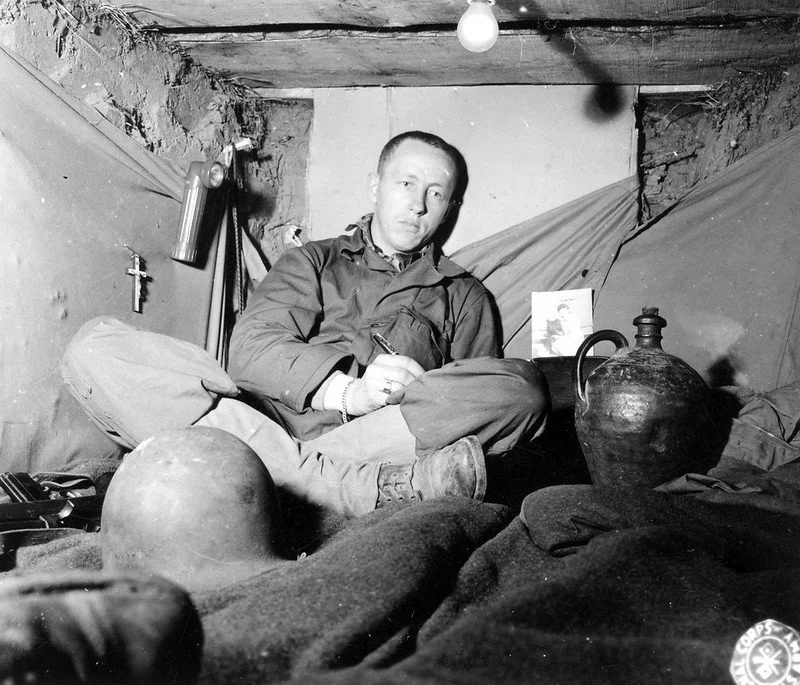
Letters
Between operations and battles, soldiers often wrote home to their loved ones, telling them of their time at war through writing stories, drawing depictions of events, or even sending home artifacts. Soldiers in combat divisions and reserve roles alike wrote letters home, many of which were preserved. Even though the letters soldiers sent were preserved, many of those they received were not. Writing was often a peaceful pass time for soldiers when not in combat. Writing home to their families and friends allowed the soldiers to think of home and people who were not in the war with them.
In a historical perspective, soldiers’ letters gave firsthand accounts of what life was like on the war front, in training, and in occupational duties. On the other hand, many soldiers did not write about their combat experiences because they believed that their stories were insignificant to those who lost their lives. However, their correspondence showed personal expressions and intimate glimpses into how soldiers felt, thought, and passed their time while at war.
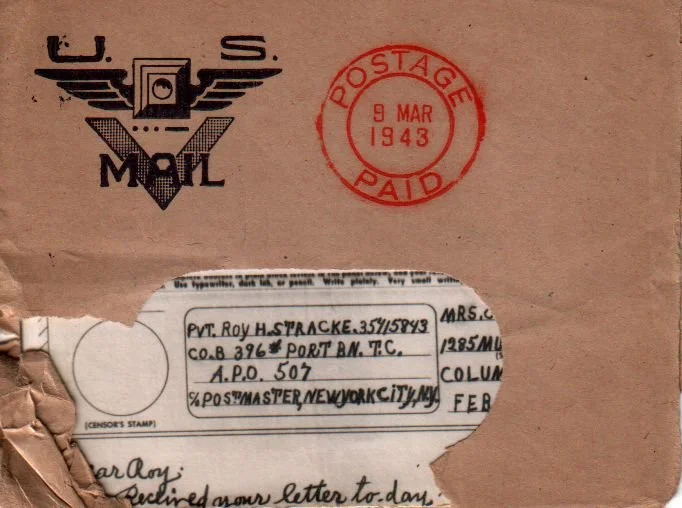
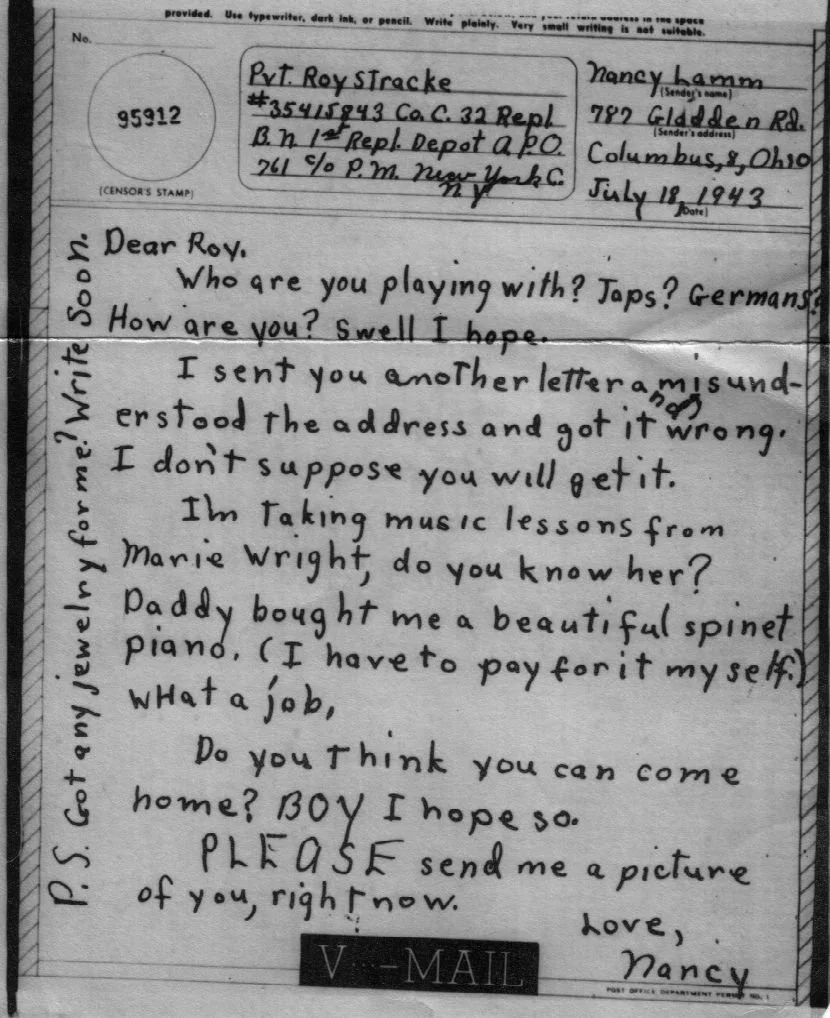
Victory-Mail, nicknamed V-Mail, was a hybrid mail program used by the United States to communicate with soldiers in both Europe and the Pacific. V-Mail sheets were small letters, about 7 x 9 1/8 inches that were mailed through the Military Postal System, and allowed soldiers’ families to send personalized, but patriotic letters to their soldiers abroad. V-Mail was also censored by the Military Postal System, where each piece of V-Mail was photographed and transported as a negative microfilm. Through this process, V-Mail would arrive at its destination at about sixty percent of its original size. Photographing and making negative microfilm of V-Mail letters allowed the U.S. Government to thwart the usage of microprinting, invisible ink, or espionage.
To view more information on V-Mail in World War II, click here.
-
Last Names: A-I
-
Last Names: J-P
-
Last Names: Q-Z
Photo Credit: SC 191924 - 1st Sgt. Steve Chicos, of Gary, Ind., 83rd Signal Company, 83rd Infantry Division, relaxes in his improved version of a foxhole, complete with electric light, somewhere in France. 26 July, 1944. U.S. Army Signal Corps Archive via Flickr.
Photo Credits: V-Mail Photos from Victory-Mail Wikipedia, V-mail - Wikipedia. Photograph of soldier writing from US Army Signal Corps Archive Mail Album on Flickr.