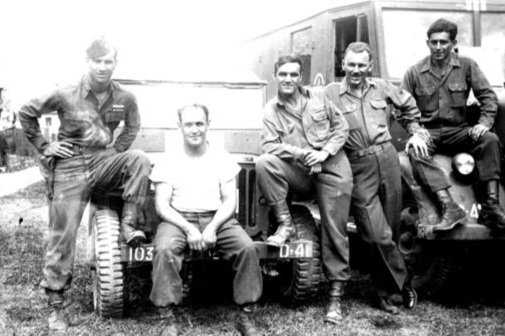
103rd Infantry Division
User Guide: Family Members
How should I start research on an individual veteran?
If you would like to start the research process, we recommend a few resources that can help you begin your search. If you are unsure where to begin, one great place to start is to read through a few research guides that explain the different types of military records that might be useful and where these records are located. In addition to reading this research guide, we recommend downloading and utilizing the National World War II Museum’s free guide, “Researching and American Military and Civilian Records from World War II.” This short booklet is designed to explain the various types of military records, detail their locations, and explain how to access these records.
Another valuable resource available for purchase is Finding Your Father's War: A Practical Guide to Researching and Understanding Service in the World War II U.S. Army by Jonathan Gawne. This book, which is sold through most book retailers, may also be available for free through your local library. It contains helpful guidelines on potential avenues for your research, as well as background information on many military records.
We also recommend checking out our Bookshelf, which contains other research guides, as well as more information on the 103rd Infantry Division and several soldiers’ memoirs.
Where can I find information about a specific soldier from the 103rd on this website?
If you are looking for information about a specific soldier on the 103rd Infantry Division Digital Humanities Project website, the best place to start would be our Division Muster List. Unfortunately, World War II Unit Rosters were purposefully destroyed by the US military between 1944 and 1946, so there is no surviving, comprehensive list of all the soldiers who served with the 103rd Infantry Division. As part of the 103d Infantry Division WWII Veterans Association’s original research, an association historian combed through official documents like the General Orders and Morning Reports and compiled names and other information from these records. This was used to create a “Unit Muster List” Excel spreadsheet. While this list contains the names of veterans found in these specific military records, it is not an exhaustive list and is unfortunately not guaranteed to contain the name of every veteran who served in the unit.
The best place to start your research is by accessing the soldier’s Army Serial Number (ASN) and unit information from the Unit Muster List spreadsheet. This makes finding information about this soldier easier- both on this website and on other online genealogical databases. Once you know which unit and company that your relative served with, you can go to The War: Units of the Division if you want more information about the veteran's specific unit. Any additional information about the unit will be listed there.
You should also look through The War: Document Collection and explore unit-specific information in the Unit Journals, Combat and After Action Reports, and Administrative Records. On this page, you can also see if the veteran is listed in any alphabetically arranged lists, such as General Orders, Casualty Reports, and Morning Reports. Each of these document types features a small paragraph on the webpage explaining both the record type and ways that it can be used in your research.
Additionally, some veterans have personal accounts in The War: Personal Accounts and Oral Histories. Each account located on that page is organized in alphabetical order by veterans’ last name. You can explore Memoirs, Oral Histories, Diaries and Journals, Audio Files, and Interviews for personal recollections of veterans who survived the war, as well as Memorials for deceased veterans.
If your relative was a member of the 103rd Infantry Division Association and you are curious about the records of the Association, you can visit Postwar: Men, Memorials, and the Veteran’s Association to see Yearly Meetings, Association Records, and Memorials and Monuments.
Where else can I look for more information on an individual soldier?
Unfortunately, a fire at the National Archives and Records Administration in 1973 destroyed most individual records for World War II veterans, including many of the Official Military Personnel Files (OMPF). This makes it difficult or even impossible to find personnel records and other individual information for many World War II veterans. Even if these records are not available, there are other ways to piece together parts of the soldier’s story. If you cannot find information on your relatives (or other veterans) on the website or are looking for more information, there are some great outside resources to get you started on your research. While it seems simple, using a search engine like Google to search variations of your relative’s information (name, location, service number, etc.) can often help you find other websites with records. After that, there are often resources in your local community that can sometimes help with your research.
While there are many online and national genealogy resources, the best place to start is usually at the community level. If there is a local chapter of a veteran’s organization, like the American Legion, American Veterans (AMVETS), or Veterans of Foreign Wars (VFW), you may want to reach out to them and see if they have any access to resources that can help with your search. Another great resource to check with is your local public library. Many libraries have genealogists or genealogy librarians that may be able to help with your research or refer you to other local resources that may help. While these institutions may not always have access to every resource, starting at the local level is often the best way to get help.
If you live in a different state from the veteran you are researching, it may be worth checking with their local community resources to see if they have any additional information. If there are no resources in your community or the local community of the veteran, some national veterans organizations’ websites have genealogical resources on their websites. There may also be records avaliable if the soldier was a member of the organization. You can try reaching out to their national organizations through their website- VFW, AMVETS, and the American Legion.
What other online resources could I use for my research?
If you are looking for information not available on this website, there are many other services available online that may have additional records and information.
First, if you have already located the veteran’s ASN, it is possible to use this number to search through military records housed on Fold3 (a military records service associated with Ancestry) which contains a searchable database of military and government records. It often contains images of original draft cards, military documents, and census records that can be useful in your research. You can purchase your own subscription to this service, or you can see if your local library or genealogy services might have access through an institutional subscription. This search often turns up common records such as Draft Registration Cards, Hospitalization Records, or Military Burial Records for soldiers who were Killed in Action (KIA).
Other resources for your search are free, online genealogy websites. If you are unsure of how to use these free resources, most have tutorials. Below are links to some of the more helpful research guides for finding information on veterans:
This site has man original genealogical records available and even helpful hints for finfding information on individuals.
This site is a searchable, crowdsourced database that often contains records indicating where veterans may be buried. The site may also have brief genealogical information about the veteran’s parents and any children.
This site, a collaborative site for genealogy and other historical research focusing on people and places in the United States, contains information on cemeteries, burial locations, and even local and town records. This may be especially useful if you live in a different area than the veteran that you are researching.
While this is not an exhaustive list of free genealogical resources, these are a great place to start.
In addition to these free resources, there are many paid genealogical resources that can help you locate additional information about a veteran that may not be publicly available online. Two great paid genealogy resources are Ancestry and American Ancestors. With a paid subscription to either of these resources, you can access documents that may not be publicly accessible on any of these free resources. Also, if you are looking to hire someone who can do genealogical research for you, these organizations both have professional genealogists that you can hire to do this research for you. Ancestry has a service titled ProGenealogists, and American Ancestors also has a variety of genealogy services which even includes a free, live chat feature.
There are many other online resources (some which may require a fee) that could help you with research. The National Archives and Research Administration has researchers for hire as does the Association of Professional Genealogists. Please note that many of these services will use documents, such as Morning Reports, which are publicly available for you to search yourself on this website.
*Note- If you have any documents or records that you would like to be included on this website in the future, please see more information about donating records to this collection on our “Donation” page.